
General News
-
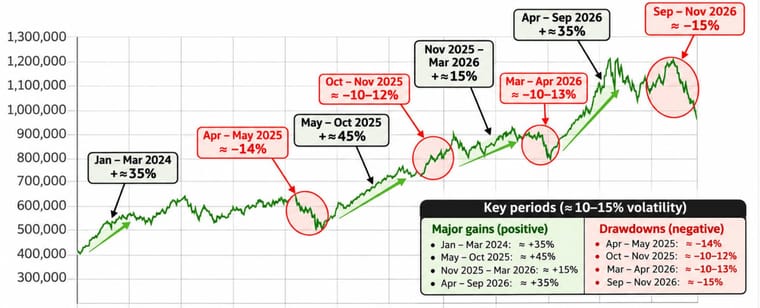
Good periods and not so good periods-what is important is there has been no structural destruction in the fundamentals of these holdings(Technology).
-
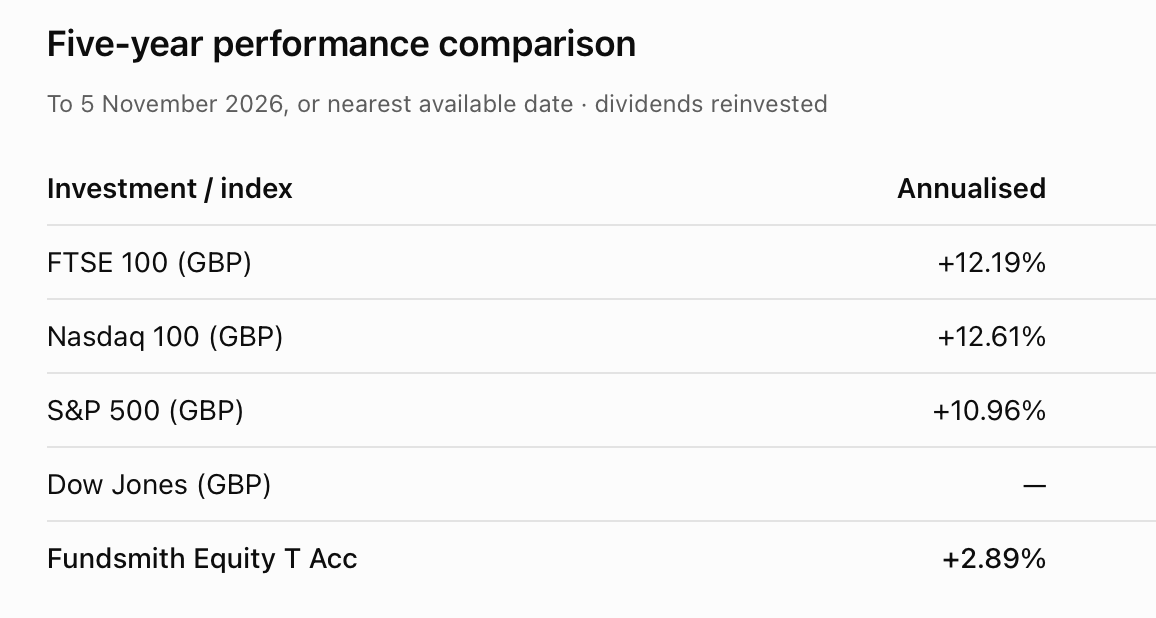
That graph looks good - I don't know what the units are but it's up from 400,000 in Jan to 950,000 now (so more than doubled in less than a year.) Can't complain about that. However I looked up the numbers for my portfolio just now and it's not pretty .... I guess it's a matter of riding the lows and looking ahead to the future highs, with confidence they will arrive. It's perhaps ironic that Fundsmith (boo! hiss!) hit an ATH yesterday.
Thanks for keeping us updated Adam.
-
Ouch ….
Just had a look ….numbers not pretty ..but there was a time when I was very happy with its current value…you’ve spoilt us Adam.. -
-
Interesting comments from Goldman Sachs CEO David Solomon, echoing exactly what I've been arguing about Democratic opposition to US data centre construction.
The demand for AI compute isn't going to disappear simply because politicians decide to make building data centres more difficult. The investment will simply move to states or countries that actually want it, taking jobs, capital and economic growth with it.
Solomon makes precisely this point, warning that the infrastructure will naturally move outside the US because the demand for compute is there.
He also confirms that financing demand for AI infrastructure remains very strong, with Goldman heavily involved in capital markets transactions.
For Nvidia and Micron, this is an important distinction. A data centre built elsewhere still needs GPUs, HBM and DRAM. Political obstruction may delay orders, but it doesn't magically eliminate the underlying demand.
The irony is that politicians claiming to protect American interests could end up exporting one of America's greatest economic opportunities.
Markets seem increasingly determined to confuse temporary obstacles with structural problems. They're not remotely the same thing.
-
A summary of Morgan Stanley Research
Morgan Stanley (8 November 2026): Buy the Drop – AI Investment Opportunities Following the US Midterms
Morgan Stanley believes the recent AI-related market sell-off is unwarranted and an overreaction to the US midterm election results. Its central argument is that AI investment isn't being cancelled; some data centre construction is simply being pushed into 2029.
The numbers are quite extraordinary.
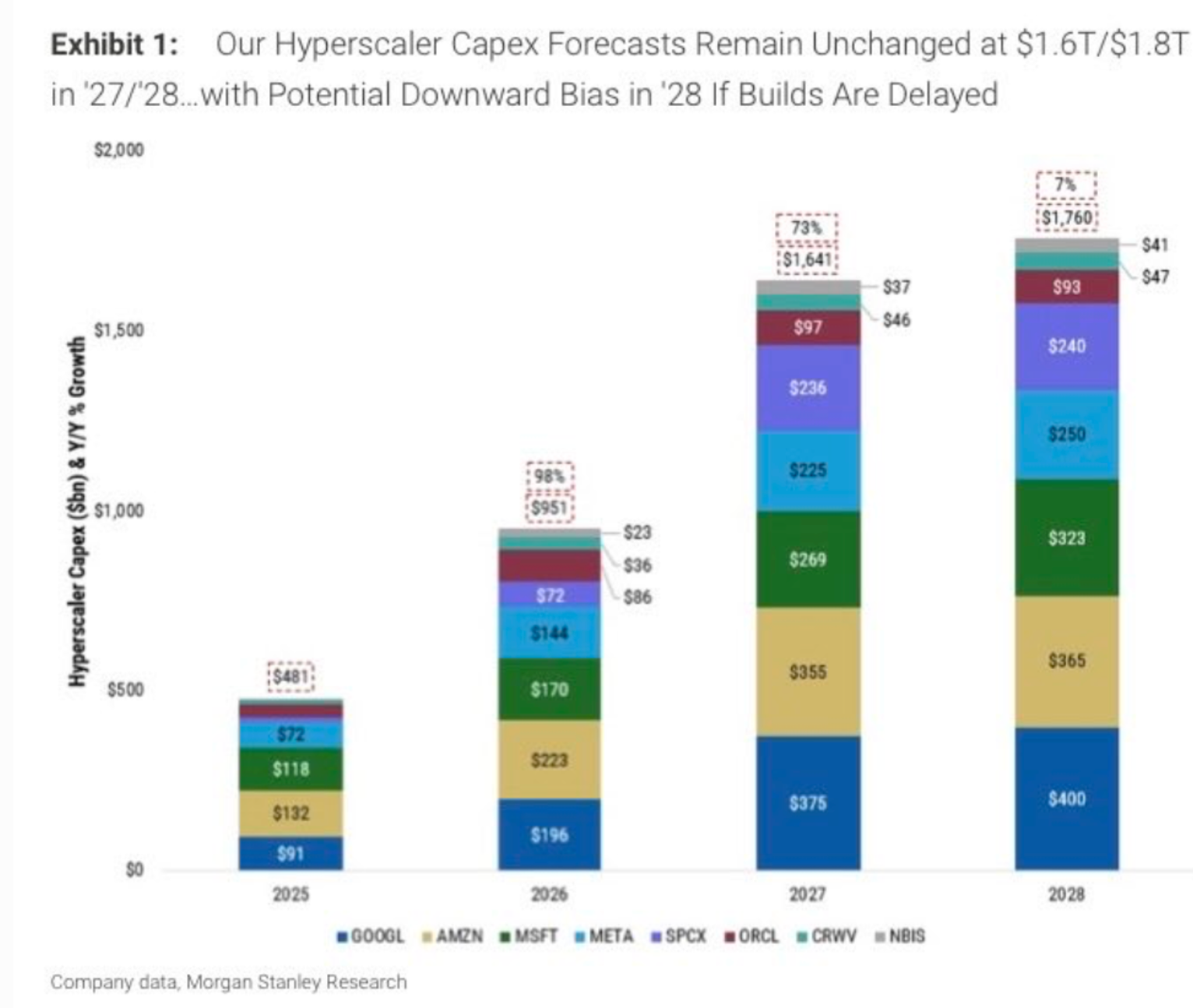
Morgan Stanley's hyperscaler capital expenditure forecasts remain unchanged:
2025: $481bn
2026: $951bn (+98%)
2027: $1.64 trillion (+73%)
2028: $1.76 trillion (+7%)
That's approximately $3.4 trillion of investment in 2027–28 alone, with Google, Amazon, Microsoft and Meta accounting for the overwhelming majority.
Morgan Stanley expects approximately 20% of planned US data centre projects for 2028, representing 5GW of capacity, to shift into 2029 following political and regulatory changes. Importantly, that's only around 10% of global projects, and 2027 construction forecasts remain unchanged.
Its modelling suggests global data centre capacity additions will still grow 9% in 2028 and 20% in 2029. US additions are expected to decline 4% in 2028 before rebounding 38% in 2029.
Morgan Stanley also forecasts a greater than 30% shortfall in powered data centre capacity through 2028. In other words, demand for compute infrastructure continues to exceed available supply.
There are several important implications.
First, the AI investment cycle could actually last longer. Delaying some projects rather than cancelling them potentially extends the spending cycle, improves supply-demand balance and supports pricing for existing compute capacity.
Second, the largest technology companies benefit. Google, Amazon, Microsoft and Meta have the financial resources, infrastructure and flexibility to navigate regulatory delays, higher construction costs and power constraints. Smaller developers and heavily leveraged operators face greater challenges.
Third, compute efficiency becomes increasingly important. Meta is targeting a tenfold improvement in compute efficiency during 2027, while Google is delivering substantial improvements through its TPU hardware and software. More efficient models should make AI applications commercially viable across a much broader range of products and users.
Fourth, there are risks. Morgan Stanley acknowledges that a slowdown in 2028 construction could temporarily weaken pricing power, increase inventories and pressure margins across parts of the technology supply chain. It also warns that further delays could create downside risk to its 2028 capex forecast.
Nevertheless, the bank remains constructive on hyperscalers, selected semiconductor companies, AI infrastructure and software businesses, arguing that recent share-price weakness presents buying opportunities.
My takeaway: This is hardly the collapse of the AI investment cycle that some commentators have been predicting. Morgan Stanley is forecasting almost $3.4 trillion of hyperscaler investment over just two years, with compute demand continuing to exceed available capacity.
There may be some disruption to the timing of projects, particularly in 2028, but the underlying investment thesis remains firmly intact.
For companies supplying the essential computing and memory infrastructure, including NVIDIA and Micron, that is a substantially more encouraging outlook than recent market sentiment would suggest.
-
Well it looks like the various shares I understand are part of PHT have all done REMARKABLY well today (MU up 11%, amongst others), and STLG is down a chunk against USD as well, which helps. Tomorrow's numbers should be healthy, but what's happened that's given the sector such a fillip?
-
From the FT today
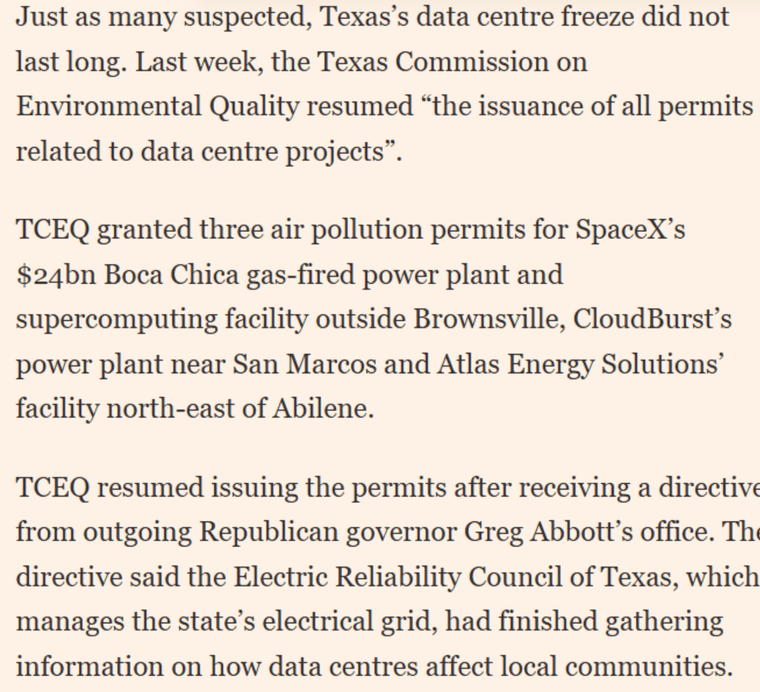
Well, well… Texas lifts its data centre freeze.
Remember the headlines about Texas freezing data centre permits and the subsequent bearish narrative surrounding AI infrastructure investment?
According to the FT today, Texas has resumed issuing all permits relating to data centre projects, including those for SpaceX’s $24bn gas-fired power plant and supercomputing facility.
It appears the temporary freeze was an information-gathering exercise rather than a fundamental change in policy.
Once again, there is an important distinction between infrastructure constraints and a lack of demand. The former creates an incentive to invest in solutions, whilst the latter would be a genuine concern for investors.
Developers are increasingly looking to build dedicated power generation capacity to overcome grid constraints.
Where is the compelling evidence for that slowdown? We continue to see enormous investment commitments, capacity expansion and efforts to remove infrastructure bottlenecks.
Another pillar of the bearish narrative looks considerably less convincing today.
